Seven Wonders
Exhibition App

ExhibitionHub, a global exhibition and cultural platform.

Brought in first as a UX Researcher, I was later carried on to design ExhibitionHub's first Seven Wonders visitor app.
I led research into accessibility gaps most museum apps ignore, proposed and secured approval for two features beyond the original brief, and delivered developer-ready wireframes in 4 weeks.
Year
2026
Role
UX Research
UI/UX Design
Scope
Research, Product,
Strategy, Wireframe
Onboarding

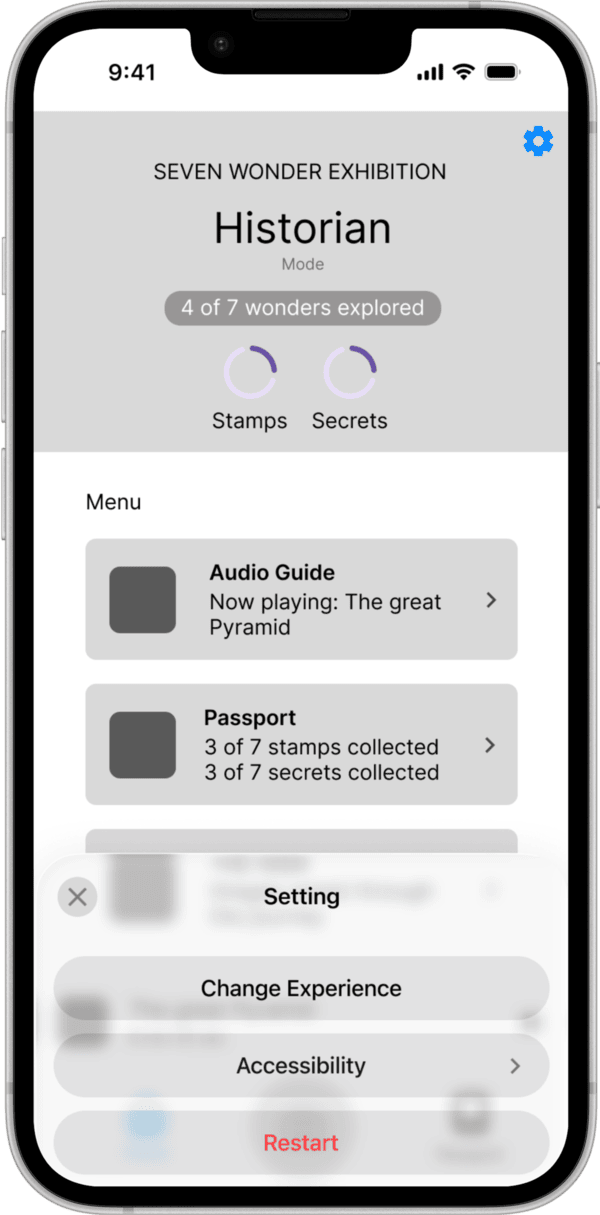
Home

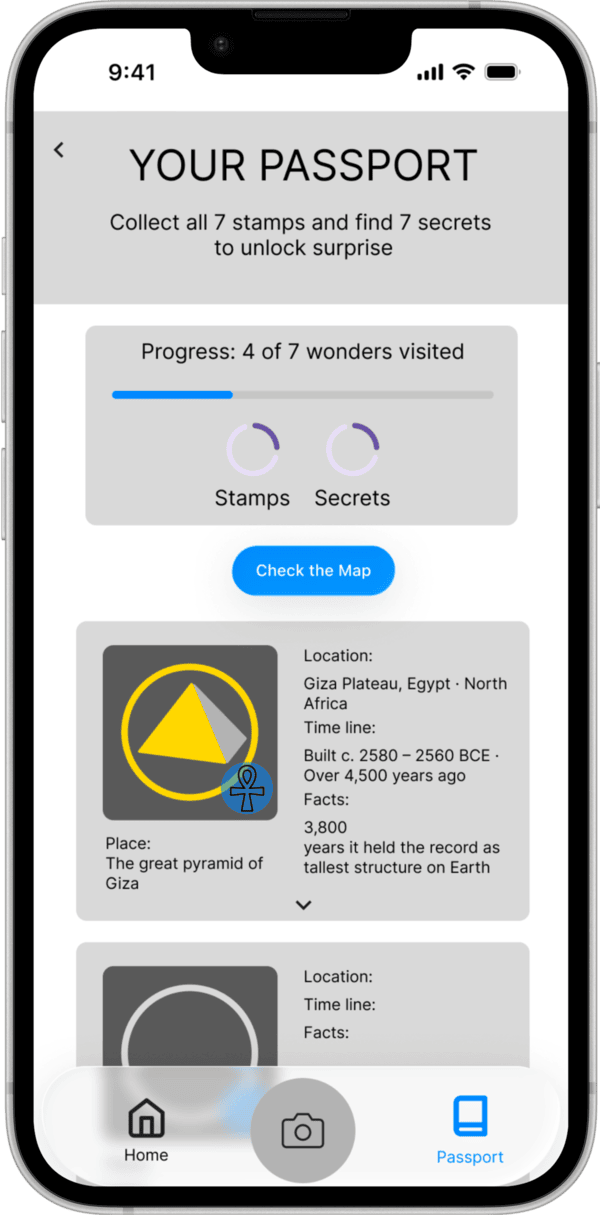
Passport View

Passport View

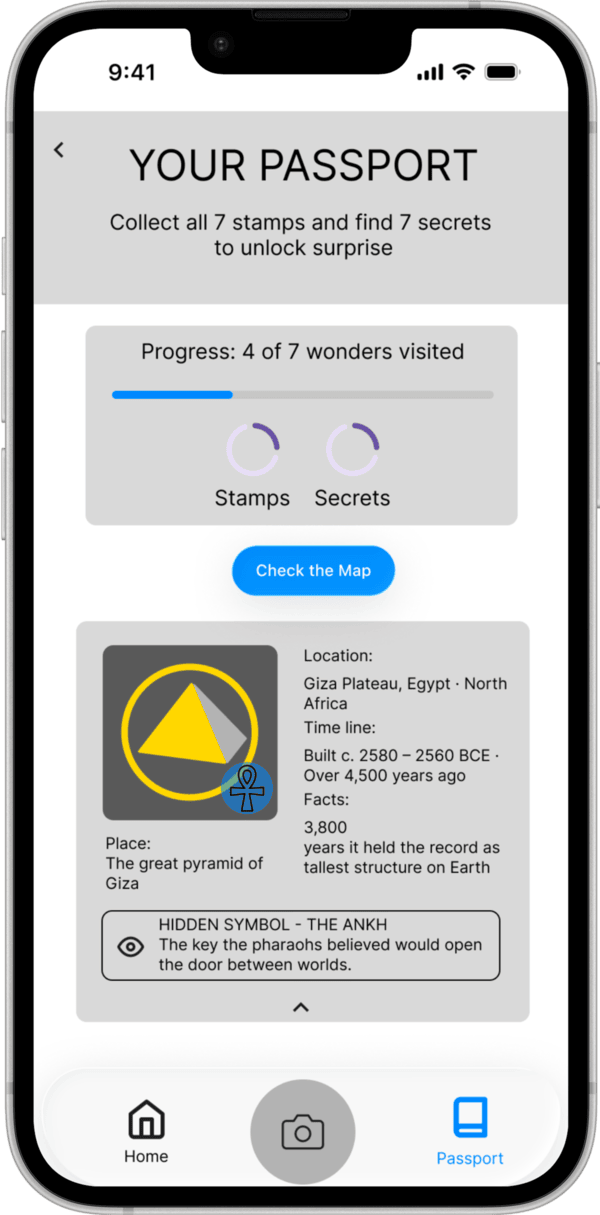
Secrets Revealed

Secrets Revealed

Challenge

ExhibitionHub had an idea for a Seven Wonders visitor app but no design or structure yet.

Fixed 4-week window: two weeks to research and define the feature set, two weeks to design and deliver developer-ready wireframes. I researched how museum apps typically function and where visitors disengage. The clearest finding: when visitors can't navigate independently, they rely on gallery staff for help, creating congestion across the exhibition floor during peak hours.
Accessibility wasn't a feature request, it was an operational requirement.

Process

Research first.
Design with evidence.

The first two weeks were spent entirely on research before any wireframe was drawn. The two research quotes above shaped what came next.
The output was a formal UX Feature Brief: nine features prioritised by impact and effort, backed by competitive evidence.

Week 01

Research & Discovery

Mapped the visitor demographic against competitor apps (Gesso, ArticketBCN, Louvre AR).
Found that onboarding friction, not feature complexity, was the biggest driver of visitor drop-off across comparable apps.

Week 02

Feature Brief & Strategy

Structured 9 potential features by impact and effort, backed by competitor evidence, so stakeholders could approve quickly without a second round of review.
Signed off within the two-week window.

Week 03–04

Wireframes & Design

Built out the full wireframe set with accessibility treated as a core requirement, not a late addition.
Delivered developer-ready Figma files with documented interactions.

Week 05

Revisit & Finalise

Refined wireframes against stakeholder feedback, finalising the set ahead of the exhibition opening.

Onboarding

Home

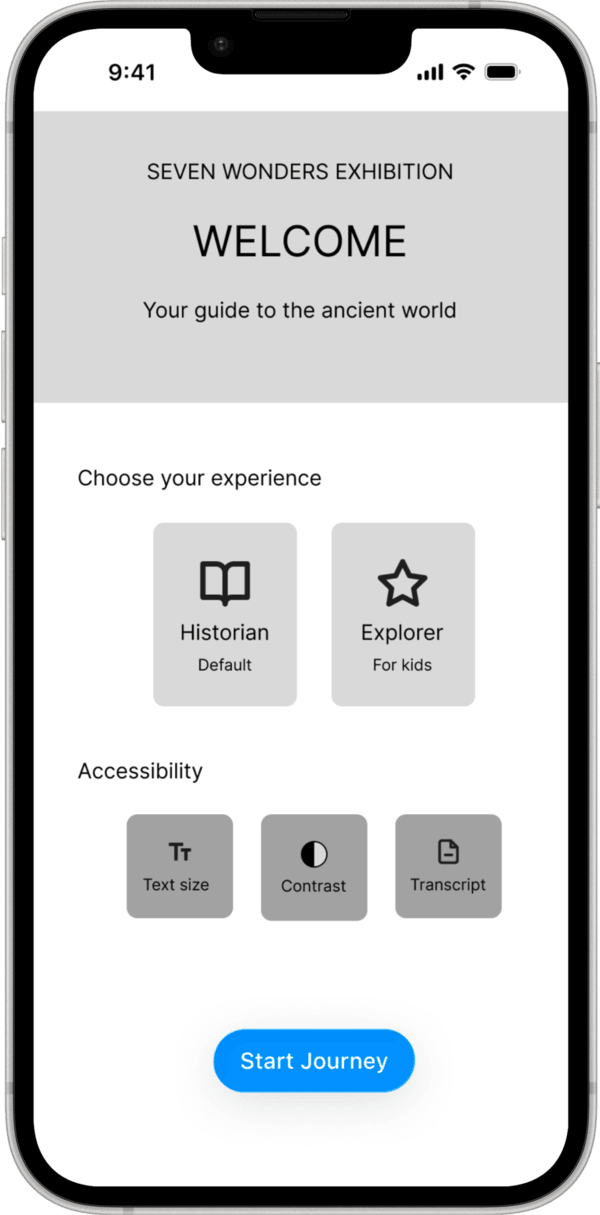
Reduced to the minimum steps needed to start, the research showed onboarding friction as the biggest drop-off risk.

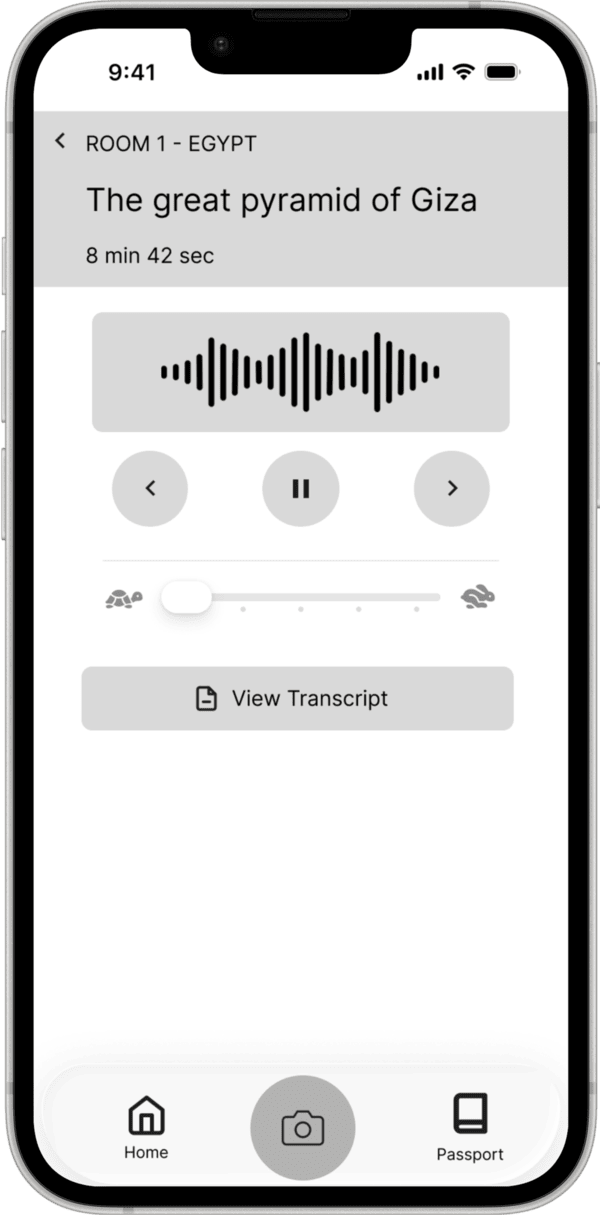
Audio Guide

Audio Guide

Built around large, high-contrast controls, accessibility considerations applied from the first screen, not retrofitted later.

Passport

Passport

Progress shown visually rather than numerically. Designed to motivate completion without requiring visitors to track stamps and secrets separately in their heads.

Key Features

Two features I pushed for.
Both approved.

Hidden Secrets

I renamed these from 'easter eggs' to 'Secrets'
Easter eggs frames discovery as a bonus, Secrets makes it feel core to the Seven Wonders mythology itself.
Rather than a purely reward-based mechanic, Secrets creates genuine curiosity-driven exploration: visitors who look closer, stay longer, engage deeper.

    • Hidden AR moments triggered at specific exhibit points

    • Each wonder contains at least one Secret to discover

    • Secrets tied to passport completion → discovering all unlocks a final reveal

    • Drives dwell time and deeper engagement with each wonder

    • Creates shareable moments → organic social reach for the exhibition

Secret revealed

Accessibility First

The Challenge section outlined why accessibility mattered operationally.
This is what that meant in practice. Knowing the visitor demographic skewed older and included families with young children.
I pushed for accessibility to be treated as core, not an add-on, including a cognitive-friendly mode that simplifies the entire journey for visitors who find complex navigation overwhelming.
A feature not in the original brief that I proposed and had approved.

    • High contrast mode and adjustable text size throughout

    • Audio descriptions at every exhibit point for visually impaired visitors

    • Full transcripts of all audio content available on screen

    • Cognitive-friendly mode → simplified journey, reduced visual complexity

    • Children's audio version → simpler language, more playful narrator

    • Group mode → one scan, multiple phones join the same session

Accessibility screen

Outcome

Designed, handed off,
going live.

The full wireframe set was delivered to the development team on schedule.
With a fixed launch date, delivery was phased by design: core features - audio guide, passport, onboarding. Ship with the exhibition opening, while Secrets and the accessibility-first navigation follow in the first post-launch update.
The app goes live with the Seven Wonders exhibition next month.

4 wks

Research to developer-ready handoff

9

Features researched, prioritised and documented

2

Original features proposed and approved — Secrets & Accessibility-first

Next project

LCA Education — Compliance Website & UX Audit